



It was after midnight when Amelia, too restless to sleep, went outside in her robe. The brochure had called it a “patio.” But really it was an indoor space designed to feel like an outdoor space inside the gargantuan biosphere that encapsulated the city of Celestial and its outer realms.
The builders had done a good job making Mars feel like Earth. They’d figured out how to create an atmosphere that enabled radiation shielding, oxygen generation, and food production. They’d found subterranean ice veins which they mined like diamonds and converted to water to irrigate hydroponic crops and fill cisterns. Air filters were constantly humming, and a balmy breeze that smelled like coconuts seemed to endlessly waft through the air.
There were no creepy, poisonous insects or snakes. But there were ladybugs, butterflies, and stingless bees to help with pollination of both edible crops and beautiful gardens. And there were birds. Nothing hunter-y or omen-ish like crows, turkey vultures, or hawks. Just little ones, like hummingbirds, finches, chickadees, and robins, that flitted about lightly, singing cheery songs that sounded hopeful. Celestial was designed to feel safe and comfortable. It was a beautifully balanced ecosystem.
Everyone who came to Celestial shared in the work, but they did not refer to “jobs” or “working.” Everyone had “roles” and “helped.” People leveraged whatever skills they already had, but the helping assignments rotated every few months so that everyone learned how to do everything or at least gained an understanding of the interdependency of things.
Amelia had been a teacher on Earth before everything began to break down, so most of the time she helped in the schools. She also enjoyed the physical and intellectual rigor of learning how to grow food and build or fix things. But she refused to do anything that had to do with death or dying. Every citizen was allowed up to three helping “types” they could refuse. So far, she had only refused the death types. Those were roles that dealt with illness, hospice, cremation, burials, grief counseling, and a host of other duties. Being here was about survival. Death was something she tried to avoid thinking about.
Amelia had struggled to sleep well ever since arriving over a year ago. The doctor told her she was still processing the trauma of leaving the old world behind, like so many others who’d made this journey.
“This is what the early European settlers of America and immigrants over the ages have felt like,” he explained. “It gets better,” he promised.
His words made sense to her. This life was a life between worlds. The old world lost, a new one forever foreign and strange. Everyone here was displaced. Everyone had lost people. She wasn’t alone. But despite being surrounded by people suffering in similar ways, Amelia felt more alone than ever. Her sons were still on Earth and she didn’t know if they were alive or dead.
***
Ten years ago life had been normal. When her father died unexpectedly of a heart attack in his sleep, it had been hard on their entire family. He was a beloved and gentle man who was not only a loving father and husband, but also very active in the community as a volunteer for various causes from soup kitchens to raising money for affordable housing to organizing sporting events to raise money for cancer research. People lovingly called him the unofficial mayor of Belltown, the small Colorado town where they lived. He was buried in the cemetery, and it seemed like the entire town came to the church service and memorial that followed.
That loss had been sudden and hit Amelia hard. In hindsight she knew it was a blessing that he hadn’t survived to see what happened next. That would have made his heart break in a much worse way. She knew because it was her reality now. That was it, she thought as she wrapped her robe around her more tightly as she stood on her Martian patio; her heart was slowing breaking and cracking into a million tiny pieces. It was a sharp pain that continually stabbed and ached.
Nobody had been prepared for how quickly civilization on Earth fell apart socially, politically, environmentally, and economically. It had begun when the digital world everyone relied upon simply stopped working and disappeared. All the screens just went black. There was no way to communicate or cooperate at scale. Money became meaningless with no way to access banks and there was nothing to buy anyway in the old sense; stores were looted and empty, gas tanks ran dry, flights were grounded, and shipping ceased. It took only a matter of weeks. Storms got bigger and did more damage. Crops failed and couldn’t adequately be grown let alone dispersed. Eventually absolute chaos ensued. Millions perished.
Her sons, who were in their late teens when the end began, had basically had to grow up overnight. One day their biggest worry was sports, girls, and grades, and the next they were fighting for food and water and learning how to use a gun. They had to steal the gun first though. It was a living nightmare.
Her mother was living with them when it happened. Together, Amelia, her husband, mother, and sons had eked out a precarious existence despite the loss of running water, heat, or electricity. During that time they’d all improved their survival skills, learning to hunt, treat wounds without modern medicine, and defend themselves against attacks from other people trying to survive at any cost. Her seventy-five-year-old mother had surprised everyone with her stamina and grit, helping in every way she could. Amelia was proud of her family, and especially her sons, as they became young men. It had begun to feel like they could and would survive this new reality.
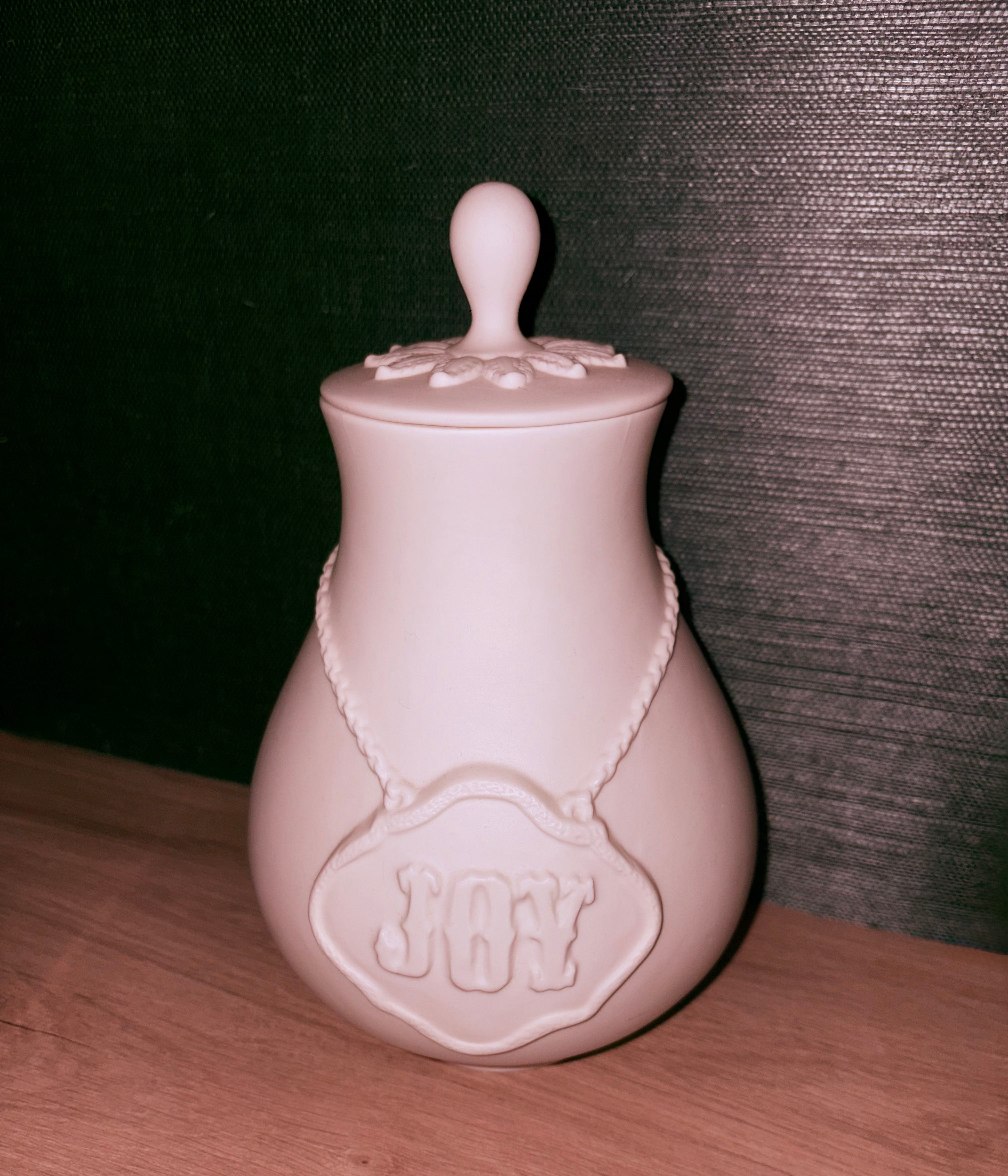
But then food became even more scarce. Her husband had left one day to go hunting and never returned. Months passed, and they lost any hope they’d ever see him again. By then Amelia’s sons were entering their twenties. Amelia’s mom fell ill and after just a few weeks, died. They’d had to have her cremated because the cemetery was too full and the church had become a makeshift hospital. Cremation had been mandated for all deaths, but spreading ashes was discouraged for sanitary reasons having to do with the town’s water supply. Too many people were dying, and people kept coming there from other places, and they were mostly dying too. Amelia’s mother’s remains were kept in a simple white vase adorned with her name, “Joy.” Her name fit her personality. Being trapped in a vase did not. But they couldn’t decide what else to do.
One day a drone flew overhead and dropped thousands of brochures down upon the valley advertising an opportunity to live on Mars. Apparently, the technology had been in the works for decades and a well-resourced but secret enclave of scientists in Texas had been working to make it a reality, even after all the mass catastrophes. They were recruiting courageous people to go live “off-planet.” Tens of thousands were already there. The flyers also confirmed the rumors that millions were still dying here on Earth. Moving to Mars was an attempt to save humanity.
After long deliberations, weighing the pros and cons of leaving the life they’d carved out in their old familiar town, Amelia and her sons agreed that staying seemed unsustainable. They decided to make their way to Texas to learn more. It was summer, and the time to go was now, before winter came. They set out on horseback, uncertain, but hopeful. They couldn’t bring much with them, but Amelia brought along her mother’s ashes in the vase.
It took them two months to get to Texas, and another month “camping” in a field of tarp tents before they were accepted into the program. But by the time that happened there was only room for one more person on the next shuttle, and only women or children were being considered. The departure was imminent. Her sons promised they’d come on the next shuttle, which would leave a month later. They insisted that she leave without them. It was rushed with no time to debate or weigh the considerations. She did what her sons told her to do, as if they were the adults and she was the child. She got on the shuttle. The minute the airlock closed she regretted it.
So much time had passed since that day, but her sons hadn’t been on any of the subsequent shuttles. Her inquiries about them led nowhere. She felt she’d made a terrible mistake leaving without them. The news from incoming refugees wasn’t good; more and more people had begun arriving in Texas. Violence was escalating. Amelia found herself distrustful and angry at newcomers to Mars, wondering if perhaps they had stolen her sons’ tickets, or hurt them, or worse. The magnitude of unknowns and waves of all-consuming guilt was torture. Sleep alluded her because her mind couldn’t shut down all the thoughts that swirled incessantly about whether or not her sons were okay.
***
Suddenly sprinklers shot to life startling Amelia out of her memories. A train’s forlorn horn sounded, probably taking night shift workers home along the perimeter of the biosphere. Crickets chirped somewhere near. A rustling sound in a nearby bush, maybe a breeze, maybe a bird. She closed her eyes and focused on these familiar sounds that reminded her of a home long ago in another life.
The memory was soothing. She felt grateful, as well as guilty, to be here. When she’d first arrived, she couldn’t believe her eyes when she saw the kitchen stocked with fresh fruits and vegetables and closet full of clothes. Her assigned “dwelling” was incredible. All the dwellings were beautiful in fact, appointed like homes in design magazines, with a range of design preferences. She had chosen “Organic Modern” because the photos in the brochure were so serene and simple. Other design styles felt either too cluttered, too fancy, or too much like Colorado; she wanted it to feel different from home, because this wasn’t home. Not yet. This still felt “away from home.”
The views from her dwelling, which was situated on a hilltop, reminded her of Arches National Park in Utah. They’d taken the kids camping there once. Being there had felt paranormal. Her oldest son Rowan had said, “It’s like we’re on another planet in another galaxy!” They’d all slept beneath the stars, eyes wide open gleefully resisting sleep, in search of shooting stars, satellites and maybe UFOs. Rowan and his brothers, Silas and Theo, giggled and told stories, and Amelia and her husband had held hands just listening to the happiness of their children. It was a memory she cherished. Now here she was, on this new planet, among those stars and distant galaxies wishing she could sleep. Wishing they were here with her to see this place.
At night, the Milky Way spread its expansive diamond-like wings of star-studded galaxies over the sky. It felt close enough to touch, but Earth was just a tiny but bright blue dot in the distance and felt so far away. The landscape was shrouded in an inky black darkness. But by day it became a varied terrain of browns, reds, oranges and purples. Vast seas of sand, tall mountains, buttes, and strewn boulders the size of buildings stretched out for miles.
In a couple hours the small sun would rise, revealing a butterscotch sky. Mars had two moons, but she only ever really noticed Phobos, the bigger misshapen one, which sailed through the sky every few hours like an awkward, bumbling potato. The smaller one, Deimos, trailed Phobos more slowly, like a snail chasing a rabbit. The dust storms were dramatic and exciting, like watching an abstract painting in action. She felt like Phobos, going in circles, day after day, navigating chaos and beauty, dark and light.
Her thoughts turned from her sons’ fate back to her mother’s ashes. Amelia still hadn’t decided what to do with them. She wanted her mother’s remains to be able to rejoin nature, not be trapped inside a vase. But this place was not the nature anyone had in mind. Plus there was a part of Amelia that wanted to return to Earth to try to find her sons and she didn’t want her mother to be left here if she decided to leave.
As a teenager, Amelia had argued incessantly with her mother, like most teens tend to do. She accused her mother of being a worry wart, too negative, and too strict. She hated the rules her mother set and her father had gone along with. Her friends’ parents were so much cooler. But as the personal and global tragedies mounted, she came to see her mother in a new light. She was the glue that held everything together. She was the north star that guided them through every storm. She didn’t sugar coat things, and she was an expert scenario planner, yet always found a silver lining. Even amidst the grief of so much death and destruction, Amelia’s mother focused on the joy they’d shared when they were all still alive. “We are so lucky we have those memories,” she’d say, and then tell another story. Her mother was the kind of mother she wanted to be. But she had left her sons behind. They had protected her instead of her protecting them. She felt like a fraud.
She went back inside and sat across from the shelf where the “Joy” vase sat between a collection of books about Earth’s history and Mars’s potential. Her mother shouldn’t be contained. But where should she be released? Here, or back home? Was this home now? Would it always be?
Beyond the biosphere’s transparent walls, the planet’s temperatures vacillated between deadly highs and lows. Ashes had to be spread out there and required a specific protocol. She had managed to avoid not only the death roles, but also anyone associated with them. She wasn’t sure what it might entail, and she worried about that as she drifted off into a dreamless sleep.
When she woke up a few hours later, the first thing she saw was the vase. Late morning sun was slanting through the living room and fell upon it like a spotlight. Dust motes swirled in the warm, buttery ray. It reminded her of one of her last conversations with her mother. It had been a morning like this, with the sun angling into the room, making a point of the new day. Dust motes had swirled and settled on the quilt her grandmother had made that laid across her mother who sat propped up with pillows.
Amelia had been crying and her mother said, “Honey just accept the way things are and move on. It is what it is.” They talked for hours, and she did her best to reassure Amelia that everything would be fine.
“Look at how much you’ve already survived,” she said putting her hand gently on Amelia’s cheek.
“But I need you,” Amelia said, “I love you.”
“I love you too, sweetheart. But you need to build a new life. We all must do that from time to time. Life keeps us on our toes. And the boys will help you; they’ve become such capable young men.” Tears welled in her mother’s eyes, but she was smiling. Her mother had the most beautiful smile.
Amelia got up from her chair and went to get dressed. She was building a new life now, but without her sons it felt wrong. She decided it was time to go back to Earth. Today she would go make her return request official at the City Center.
***
When she got to the building where everything was decided, it was mayhem. Another shuttle had arrived with even more refugees than the last time. Amelia felt her muscles tense as she pushed through the crowd, determined to ignore these newcomers who had undoubtedly cheated her sons and her of being together. People were shouting and shoving as families searched and called for the people they hoped would arrive. Amelia had stopped doing that along time ago. It was too disappointing. There was the occasional joyous shout, but mostly it was all just shouting. Amelia tuned it all out as she pushed forward. Then someone grabbed her arm.
“Mom!” She froze, unable to turn or raise her eyes. Too afraid to be once again disappointed.
“Mom, it’s me. It’s us. We made it.” The voice sounded like Silas.
Hands turned her around and lifted her chin. And there they were, the three of them. Alongside them was a young woman with a baby in her arms. Amelia didn’t know her. But her sons she’d know anywhere. Overcome with emotion, she fainted.
***
When she came to, she was in her dwelling again, laying on the window seat that overlooked Mars. Her grandmother’s quilt covered her.
“Hi,” said Rowan. Silas stood behind him and smiled.
She burst into tears and covered her face.
“Mom, it’s okay. Don’t cry,” said Theo. He had always been a gentle consoler.
She wiped the tears away and blew her nose into the tissue Silas handed her. Then she finally said, “I was just about to come find you down there. What took you so damned long?” Then she began crying and laughing at the same time. They cried and laughed with her.
They explained they had met Sadie, the young woman Amelia didn’t recognize, just after Amelia’s shuttle left, and before theirs was to leave. Sadie had been robbed and left for dead. Her sons had helped her, and Silas had become particularly close with her, taking over as her main caregiver nursing her back to health. She didn’t have any broken bones, but her jaw had almost been broken and she’d suffered a serious concussion, so her healing took weeks. His brothers could see Silas was in love with Sadie before he could. She had trained as a nurse before things fell apart and spent the following years traveling the country helping people, acquiring more healing skills as she went. She was brave, humble, and as it happened, quite pretty. She became pregnant; Silas was going to be a father. They all agreed the four of them would stay on Earth until she could give birth. Then they would go to Mars together. They had to give up their spots and hope they’d be able to get new ones. They had to hope Sadie would survive the pregnancy and the birth, and hope that the baby would be healthy. They had to hope their mother got the letters they sent.
Amelia said, “That was a lot of hope you had to have. I hoped so much too.” She told them she never received any letters. They would never learn why that was or what got in the way.
“Is Joy still inside Joy?” asked Rowan with a nod to the vase on the shelf.
“Yes, she is. Begrudgingly,” Amelia said with a chuckle. She explained her hesitancy about whether to spread her mother’s ashes here or not. She explained that she had just resolved to return to Earth that morning so she could find the three of them and spread her mother back home in Colorado.
“But now that you’re here, I think I’ve changed my mind,” she said.
“I sure hope so because it was kind of an ordeal for us to get here,” said Sadie shyly from the doorway, the baby in her arms.
“It’s so nice to meet you, Sadie,” said Amelia, “Come her sweetheart. Let me see my grandson. What is his name?”
“His name is Joyner,” Silas said as he placed the little boy in Amelia’s arms.
They spent the rest of the day and into the evening catching up, laughing, crying, and whenever someone got hungry, eating whatever they could pull together. Rowan, Silas, Theo and Sadie couldn’t believe the plentitude. The baby was beginning to sit up and kept himself happy grasping at dust motes, gumming his fingers, and cooing to imitate the happy people around him. Amelia felt a strong presence of her mother in the room the entire day.
Before they went to bed she said, “I think we should all stay here and we should spread Joy’s ashes here too. I’ll look into what we need to do to make that possible in the morning.” Everyone agreed that was a good plan.
***
A few weeks later they stood together on the precipice of a butte high above the valley their dwellings looked over. They wore space suits provided by the city. The end-of-life doula waited at the rover. It was a glorious Martian morning. The Milky Way was still visible, just barely, against a sky that looked like a bruise, and the red and orange deserts and rocks vibrantly shimmered in the oncoming light of day. A dust storm in the distance looked like dancers with twirling skirts. They’d left Joyner at home with a helper. Before leaving they had removed a tiny portion of the ashes and mixed them into the dirt of one of the lemon tree pots on the patio. They wanted a small piece of Joy to always be close, no matter where they went.
Amelia said, “Let’s do this,” and opened the lid of the vase.
In beautiful cloud of matter, her mother’s ashes, free now from captivity and gravity, rose gently out of the vase into the air. The breeze caught them, and they dispersed away like an exhaled breathe, swirling into the thin air. Amelia and her family held hands in reverent silence for a few more minutes. Then they all returned home, together.
THE END
What an amazing, thought provoking, and well written story I love your work Ashley and look forward to my email from you/Briefly each week!