


Last Friday I mentioned I’ll be sharing a stories from our life in the airstream, and I will. That is coming soon…In the meantime, I hope you enjoy this short story about a little boy named Arthur.
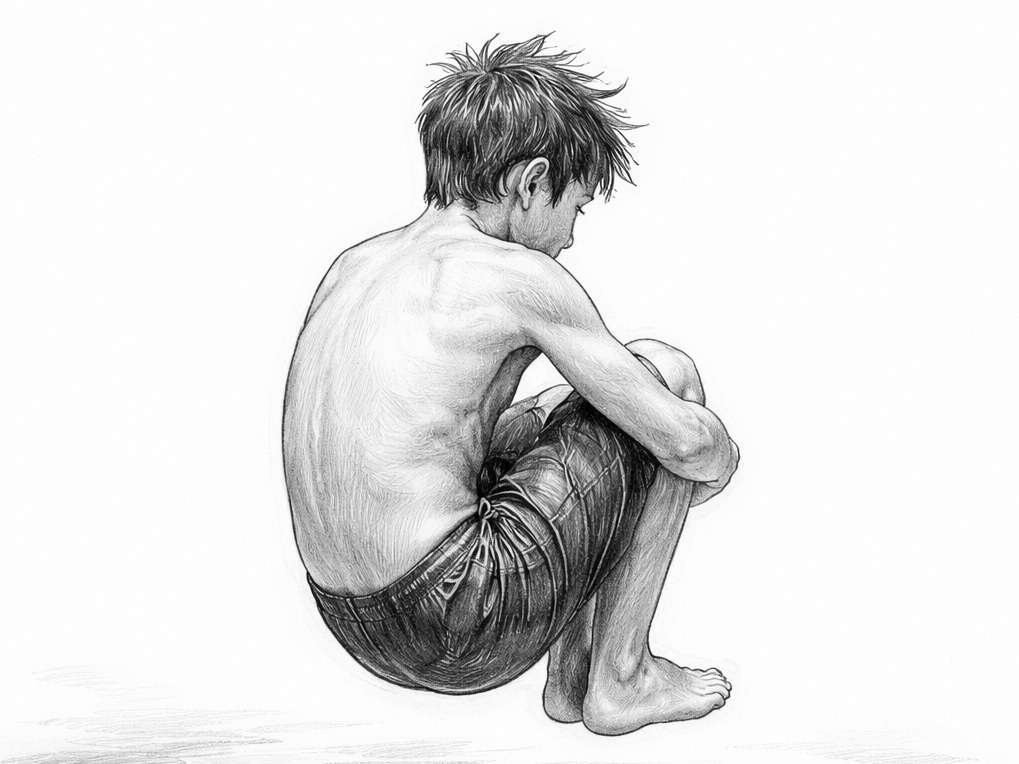
Arthur was ten years old and on his way home for Christmas from boarding school. The past four months at Engleton Academy had seemed endless. That morning as he waited on the school’s front steps for the taxi to pick him up and take him to the airport, it was so cold he could see his breath. His headmaster stood next to him, staring straight ahead. Arthur told Mr. Hallow he felt sick, but without looking at Arthur, Mr. Hallow said only, “You’ll feel better soon, it’s only butterflies.”
Imagining winged insects inside his stomach only made it worse. He always felt ill at the thought of flying, and he was nervous about going home, even though it was what he wanted most in the world. He turned and vomited into a giant planter with a topiary shaped like a lollipop. The headmaster scowled and strode off to find someone to clean the mess. Shame settled over Arthur like a blanket, muting the sick feeling and turning his cheeks red and hot.
He had written his mother a letter after the first couple weeks, telling her how lonely he was, begging to come home. His mother had written back that he was never, ever to write her such a letter ever, ever again. It had made her sad and he needed to be a big boy, she said. She had underlined the word “ever” each time. So he hadn’t written anymore letters, and he was hopeful that would undue any damage he had caused by complaining. He wanted to make his mother proud. He hoped the headmaster wouldn’t tell her about the vomiting.
At school, if he wasn’t sleeping, dressing, eating, in class, or in the library studying, he simply sat on his bed looking out his narrow window through crawling ivy, imagining what it felt like to fly anywhere you wanted to, like a bird, or even a butterfly. Or perhaps fall like a leaf, so effortlessly. It looked so easy.
It was a two-hour flight from school to home. The small plane bounced and jerked its way through cumulus clouds that reminded him of cauliflower. He hated cauliflower. The intense hum of the propellers sounded like a swarm of furious bees. The butterflies were going nuts inside him. But despite all these unfortunate things, Arthur’s excitement was mounting and he was beginning to feel more hope than dread. He was excited to sleep in his real room. Excited to eat Doris’s pancakes. She always sprinkled his pancakes with powdered sugar and said, “Here you go Sir Arthur, ‘cause you’re so sweet.” He loved Doris. She knew his favorite stories were about King Arthur and the knights of the round table and Camelot. He dreamt of being someone important and loved, just like King Arthur. Even though King Arthur ended up kind of sad, Arthur knew he was the hero of the story. Arthur wanted to be a hero, not a villain. He was perplexed by Lancelot and didn’t understand that character at all.
He hoped that once his parents saw him again, they would realize how much they had missed him. Maybe he wouldn’t have to go back to Engleton. Maybe they’d enroll him in a local school, and he could take the bus there like a normal kid, like his new pal Matthew who lived down the street. He missed Matthew even though they’d only met that summer. Arthur didn’t have many friends.
He was less excited to see his siblings. His three sisters were much older; he wasn’t even sure they knew he existed and he didn’t understand them at all. They were either getting ready to go out with boys or looking through magazines giving advice about going out with boys. His younger brother, Charlie, was less than a year old, cried a lot, no matter how much the nanny tried to sooth him, and worst of all, he smelled like rotting fruit. His feelings about his older brother, Harold, were more complicated.
Smitty, the driver, met him at the gate. Smitty was a gentle, kind man, and could tell Arthur was tired right away. “Hello, Mr. Arthur. My, you look so much taller, you must be exhausted from all the growing you’ve been doing. I’ll get us home, lickety-split, so you can freshen up in time for dinner.” He gave Arthur a little box of mints while they waited for his luggage. Arthur wanted to hug Smitty, but he wasn’t sure if that was allowed. Nobody else ever did. Instead he had just said, “Thank you Smitty.”
Riding in the back of the long black car from the airport to the house, the window felt cool against Arthur’s forehead. Otherwise he was unbearably hot and itchy in his wool suit and overcoat. The falling snow immediately turned to rain as it hit the car windows, streaming down like tears.
Last summer when his family had moved to Ann Arbor, Arthur couldn’t believe his bad luck when he saw that the pool his parents had promised him was actually located inside, in a muggy, chlorine-scented room with a glass ceiling and walls. He had expected a pool like their California house, which was open to the sun and sky, surrounded by a wide lawn, dogwood trees, and the intoxicating perfume of his mother’s rose garden. Every spring she ordered boxes of ladybugs and released them into the garden to eat the “bad bugs.” He watched fallow, snow covered fields blur past the window and wondered if ladybugs ate butterflies or bees.
The Michigan house was not like the California house in other ways too. The California house was a sprawling single level ranch that made a U-shape around the landscaped grounds and pool. The Michigan house was the opposite. It sat in the center of the property, surrounded by tall hedges and wide lawns. The house itself was made of dark granite blocks; its multiple dormers and chimneys gave it a sharp, pointy effect, like raised eyebrows. They had moved there because his grandfather needed his father to manage a family business in Michigan now, instead of the other business in California. Arthur was afraid of his grandfather.
Arthur hated how their new house felt like a fortress, but that summer he had made the most of it, pretending the hedge was a moat and he was a knight on a magnificent stallion guarding a castle. But it would be too cold and icy to play those games now. He decided the first thing he would do when he got home was get out of his scratchy clothes and go for a swim. Maybe having an indoor pool was a good thing after all.
During the drive, to keep his mind occupied, Arthur planned his pool entry. He had hoped to master diving by Christmas break so he could show off to his older brother, Harold. There was a pool at school, and in P.E. they often had to swim laps. Once the teacher taught them how to dive. But Arthur could never get the proper push off. He either slid pathetically in headfirst, or he hit the water wrong, slapping his belly pink.
Diving was not in the cards, at least not this Christmas. Harold would make fun of him. Arthur decided to do a cannonball instead. Classic, less risky, lots of splash. In his mind, Arthur imagined Harold watching in awe as Arthur rose into the air, and then Harold laughing out loud as the splash doused their sisters, who would of course be lying oblivious on the chaise lounges, reading their dumb magazines. The girls would scream and shout bad words at them. Harold loved stuff like that. This seemed like a much better plan.
The sound of the gravel drive beneath the car’s tires brought him back to the present.
Doris met them at the door and gave Arthur a big hug, and a wet kiss on the cheek. Sometimes Arthur wished he could just go live with her, wherever she lived. Smitty drove the car around back to the garage as Doris helped him carry his bags up to his room. “Dinner will be in an hour, so rest up and wash up, Sir Arthur. It is sure nice to have you home.” She smiled and left, closing the door gently, and he let out a giant breath that he hadn’t even realized he’d been holding. It took him only a couple minutes to get into his swim trunks.
“Hello! I’m home! Is anyone else here? ” Arthur yelled, standing outside his door. This greeting was met only by the loud ticking of the grandfather clock downstairs. he tried again. “Hello? Anybody home? Anyone for a swim?” Finally, a door opened at the other end of the hall, and Harold sauntered out.
“Welcome home Fart-thur,” he said, looking Arthur up and down. He added, “You wanna swim, huh? I’ll race you… Mark! Get set! Go!”
Arthur might have noticed that Harold didn’t have a swimsuit on. But it didn’t seem important at the time. Harold had commandeered the situation, as usual. And Arthur took the bait, as usual.
Arthur dashed down the main stairs; Harold took off the other way towards the back stairs. Their feet could be heard on either end of the house like a drumroll announcing a big event. Arthur nearly collided into the grandfather clock in the foyer as he rounded the entry table stacked with books and a massive floral arrangement. He jumped over sofas and slid under tables, trying to dash in as straight a line as possible to the pool room. As he entered the kitchen, he saw Harold slip through the door on the opposite side of the room which led to the pool. Arthur realized in that split second that he’d lost the race. But with the adrenaline pumping through his veins he couldn’t stop. Now it was simply more imperative than ever for his cannonball to be incredible. Arms pumping, legging pounding, little bare feet slapping the tiled floor, he ran as fast as he could, as if his life depended on it.
He entered the pool room, took a huge mid-run step up onto the diving board, and kept running to the end of the board, where he paused only long enough to get in a big bounce. Then he threw his head back and released a whooping “Geronimooooooo!!!!” as he tucked his knees into his chest and rose high into the air.
He was still mid-air when he realized there was no water in the pool.
Time stopped, then proceeded in slow motion. Out of the corner of his eye he could see Harold laughing with wild eyes, pointing at him soaring through the air. Arthur did his best to untuck his legs and arms, flailing about, instinctively trying to keep upright so he wouldn’t land on his tailbone, back, neck or head. It took forever. It took an instant. He saw cumulus clouds puffing, bees swarming and leaves falling, all without any sound other than his heartbeat pounding in his ears.
He landed feet first, smack upright, arms overhead, like a gymnast off the pummel horse. It was as if the floor was made of a million knives, points up. As if he was made of ice and shattered into a trillion pieces upon impact. There was not enough air to force the scream he needed to scream. Then it all went black.
He woke up lying in a hospital bed, both legs suspended in a sling above the bed mid-air. He had broken the calcaneus bones in the heels of both feet and apparently had needed an operation. His mother visited him that afternoon to drop off some clothes, but she hadn’t stayed long. She had to get back; the big Christmas party was happening and there was much to do. Arthur was at least happy he was missing that party. It was an adult affair and they mostly drank and smoked and talked about stuff that made no sense. He and his siblings were expected to dress up and mingle and behave; he always felt more part of the decoration than a person at such events. That night in the hospital the nurses taught him how to play chess, and that was actually fun.
He went home after a week in the hospital. Christmas morning his father and Smitty had carried him down to the living room to open presents with everyone. Smitty smelled like soap. Father smelled like cigarettes. His arms over their shoulders, their arms beneath his legs. Arthur pretended he’d won something, and they were carrying the victor to collect his prize.
But besides Christmas morning, he spent all his time in his bedroom, mostly in in bed. He wasn’t allowed to put any weight on his feet for a long time. He never saw his friend, Matthew, and that kept him awake at nights wondering why his new friend had abandoned him. He was unaware that his parents had not allowed any visitors to avoid Arthur getting too excited or risking further injury, and would only find that out years later.
That winter break, as Arthur convalesced in his room, his family kept busy with their own plans until his sisters and Harold went back to their respective boarding schools and his mother, father, and the baby left for a long term, cross-country business trip.
It was Doris and Smitty who took care of him. Doris helped him do everything, even going to the bathroom and bathing. She treated him with such care he didn’t mind or feel embarrassed. She brought him his meals on a tray and she played chess with him too. He was impressed by how well she played, and she even taught him a few tricks. Smitty drove him to the doctor for his follow up appointments and read him stories about cars and sports. Then in February, he was sent back to Engleton, on crutches still, but able to get by on his own.
His favorite Christmas present, and the only one he brought back to school with him, was a chess set from Santa Claus. There was something about the game that attached it to Arthur’s heart permanently. Maybe it was all the strategy involved. It seemed like something he could learn. Something where he could control outcomes if he got really good. He knew the nurses let him win. But Doris didn’t. And that made him want to win for real. He wanted to figure it out and get really good at something. He joined his school’s chess club that spring.
***
Forty years later, on a chilly day in Moscow after winning a major chess competition, Arthur went back to his hotel room, made himself a scotch and soda from the mini bar, and sat down in the sitting area of his suite, exhausted but happy. His winnings would add a nice sum to his bank account. There was an envelope on the coffee table with his name on it, and when he opened it, he found a telegram from his little brother, Charlie, who was now in his early forties and an accomplished heart surgeon. Charlie and Arthur were very close. Charlie had married an incredible woman and they had three kids who Arthur doted on, as if they were his own. Arthur had never married, and though he was still sometimes lonely, he preferred fending for himself on his own.
Harold had died in a drunk driving accident ten years earlier, and both his parents had died from cancer before that. His sisters were all married and led busy social lives in New York, Miami, and Dallas; Christmas and birthday cards were the extent of Arthur’s relationship with them.
He had remained very close with Doris and Smitty through the years, and after his parents died, helped them move to a beautiful assisted living community where Doris was the chess champion for five years in a row until she died peacefully in her sleep. Smitty died from a stroke a year later. Arthur missed them both more than he missed his parents. That made him feel a strange mix of sadness and gratitude.
The story about the waterless pool had become family lore. His nieces and nephews didn’t believe it was 100% true. Still, they all laughed when Arthur imitated himself shouting “Geronimooooooo!!!!” He always ended the story with a chuckle, saying, “Sometimes good things can come from bad things.” If it hadn’t been for that leap, Arthur might never have learned to play chess.
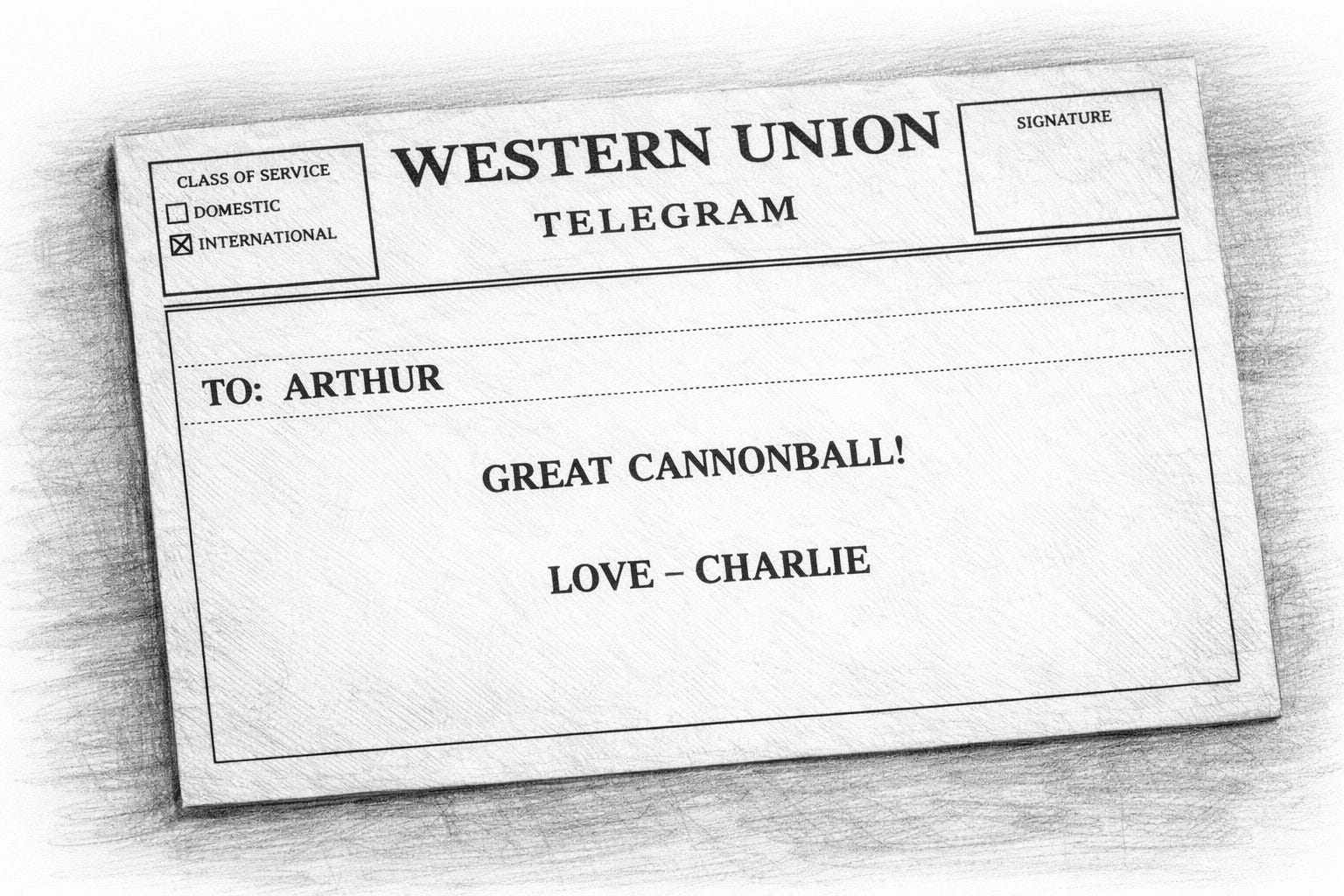
The telegram from his brother was a phrase they often used when either one of them accomplished something wonderful.
It said, “Great cannonball!”
Thank you for reading this Briefly post. I understand you’re probably swamped with emails, and that makes it all the more meaningful that you took the time to read this. If you found this post enjoyable, here are four simple ways to support this Substack:
Subscribe to this Substack, if you don’t already
Click or tap the heart ❤️ icon to like this post. I appreciate every one of those!
Leave a comment about what spoke to you the most about this post.
Share this post in a Substack Note (you need the app to do this; see the button for that towards the top of this post).
Upgrade to a paid subscription for as little as $5 per month.
Forward this email to a friend or share the link on social media.
Love it! I was really afraid the jump was the end of it!